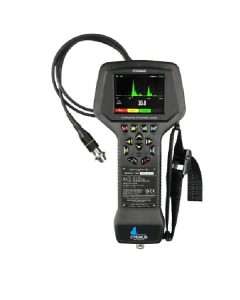
Explosion Proof Ultrasonic Sensor in Dubai | Atex Sensors Supplier
The Explosion Proof Ultrasonic Sensor in Dubai is made for industries that need safe and accurate non-contact measurement in hazardous areas. The UPR-A ATEX accredited ultrasonic sensor is used for distance sensing, level checking, object detection, and industrial automation where normal sensors may not be safe. It is suitable for hazardous locations such as oil and gas plants, chemical areas, tank farms, powder handling sections, marine sites, and process industries.
Atex Hub supplies ATEX Ultrasonic Sensors, Hazardous Area Ultrasonic Sensors, Flame Proof Ultrasonic Sensors, Intrinsically Safe Ultrasonic Sensors, and Explosion Proof Ultrasonic Sensors across Dubai, UAE, Saudi Arabia, Qatar, Oman, Kuwait, Bahrain, Europe, Africa, and global markets.
What is an Explosion Proof Ultrasonic Sensor?
An explosion proof ultrasonic sensor is a non-contact measuring device used to detect distance, level, position, or object presence. It sends ultrasonic sound waves toward the target and measures how long the sound takes to return.
Because it does not touch the material, it is useful in dusty, wet, chemical, or moving applications. In hazardous areas, the sensor must also meet safety requirements so it does not become an ignition source. The UPR-A type ultrasonic sensor is designed for ATEX Zone 2 and Zone 22 applications, making it suitable for selected gas and dust hazardous areas.
Hazardous Area Suitability & Temperature Rating of UPR-A ATEX Ultrasonic Sensor
The UPR-A ATEX Ultrasonic Sensor is suitable for selected hazardous areas where gas or dust may appear for a short time. It is mainly designed for Zone 2 gas areas and Zone 22 dust areas. This means it is useful for industrial locations where explosive atmosphere is not continuously present but may occur during abnormal conditions.
Gas and Dust Hazardous Area Suitability
| Area Type | Suitable or Not | Simple Explanation |
|---|
| Gas Hazardous Area | Suitable | Suitable for selected Zone 2 gas areas where explosive gas risk may appear for a short time. |
| Dust Hazardous Area | Suitable | Suitable for selected Zone 22 dust areas where explosive dust risk may appear for a short time. |
ATEX Zone Suitability
| Zone | Suitable or Not | Simple Explanation |
|---|
| Zone 0 | Not Suitable | Zone 0 has continuous gas risk, so this sensor is not suitable. |
| Zone 1 | Not Suitable | Zone 1 needs a higher protection level than Zone 2. |
| Zone 2 | Suitable | Suitable for Zone 2 gas areas with marking Ex nA IIC T6 Gc. |
| Zone 20 | Not Suitable | Zone 20 has continuous dust risk, so this sensor is not suitable. |
| Zone 21 | Not Suitable | Zone 21 needs higher dust protection than Zone 22. |
| Zone 22 | Suitable | Suitable for Zone 22 dust areas with marking Ex tc IIIC T60°C Dc. |
Temperature and Protection Rating
| Rating Point | Product Rating | Simple Explanation |
|---|
| Gas Group | IIC | Suitable for high gas group classification, based on site approval and full certification. |
| Dust Group | IIIC | Suitable for conductive dust group classification, based on correct installation. |
| Gas Temperature Class | T6 | T6 means the sensor surface temperature stays within the required gas safety limit. |
| Dust Surface Temperature | T60°C | The dust surface temperature rating is listed as 60°C. |
| Ambient Temperature | 0°C to +60°C | The sensor should be used only within this temperature range. |
| Gas Protection Level | Gc | Gc is normally used for Zone 2 gas hazardous areas. |
| Dust Protection Level | Dc | Dc is normally used for Zone 22 dust hazardous areas. |
Overall Product Suitability
| Point | Suitability |
|---|
| Suitable Areas | Zone 2 gas areas and Zone 22 dust areas |
| Not Suitable Areas | Zone 0, Zone 1, Zone 20, and Zone 21 |
| Best Use | Industrial sites where gas or dust risk may occur for a short time |
| Buyer Note | Always check site zone, gas group, dust group, temperature class, and certification before ordering. |
Applications of UPR-A ATEX Ultrasonic Sensor
- Oil and Gas Sites: Used for safe level and distance measurement in process areas, fuel handling sections, and utility zones.
- Chemical Plants: Helps monitor liquids, containers, and process materials without direct contact.
- Tank Farms and Storage Areas: Suitable for checking levels in tanks, silos, hoppers, and storage vessels.
- Dust Handling Areas: Used in powder processing, cement plants, grain handling, plastic granule handling, and bagging areas.
- Marine and Offshore Sites: Supports safe automation and monitoring in harsh industrial conditions.
- Packaging and Conveyor Systems: Detects product height, object position, and movement on production lines.
- Industrial Automation: Helps machines measure, detect, and control processes in hazardous environments.
Key Features of Ex Proof Ultrasonic Sensor
- ATEX accredited ultrasonic sensor for hazardous area use
- Suitable for Zone 2 gas and Zone 22 dust applications
- Non-contact measurement reduces wear and damage
- Helps measure distance, level, position, and object presence
- Useful in dusty, wet, and industrial environments
- Supports safer automation in risky zones
- Can reduce manual checking in hazardous areas
- Suitable for oil, gas, chemical, marine, storage, and manufacturing sites
- Practical option for global industrial projects
Technical Specifications
| Specification | Details |
|---|
| Product Type | ATEX Ultrasonic Sensor |
| Product Name | UPR-A ATEX Accredited Ultrasonic Sensor |
| Measurement Type | Non-contact ultrasonic measurement |
| Main Functions | Distance, level, position, object detection |
| Hazardous Area Use | Gas and dust hazardous areas |
| Suitable Zones | Zone 2 and Zone 22 |
| Gas Marking | Ex nA IIC T6 Gc |
| Dust Marking | Ex tc IIIC T60°C Dc |
| Ambient Temperature | 0°C to +60°C |
| Gas Equipment Protection Level | Gc |
| Dust Equipment Protection Level | Dc |
| Common Industries | Oil & gas, chemical, marine, dust processing, automation, tank farms |
Common Certifications, Compliance and Standards
Hazardous area sensors must selected according to site classification, temperature class, gas group, dust group, and installation requirements.
- ATEX Directive 2014/34/EU: European directive for equipment used in explosive atmospheres.
- IECEx Certification: International certification system for equipment used in explosive atmospheres.
- CE Marking: Shows that a product meets applicable European safety, health, and environmental requirements.
- IEC 60079 Standards: Common standard series used for electrical equipment in explosive atmospheres.
Why Choose Atex Hub?
Atex Hub is a trusted supplier of ATEX, explosion proof, flameproof, intrinsically safe, and hazardous area equipment. We help customers choose the right product based on zone rating, certification, output type, material, mounting style, site condition, and application.
- We supply across Dubai, UAE, GCC, Europe, Africa, and worldwide
- We support requirements for Zone 0, Zone 1, Zone 2, Zone 21, and Zone 22
- We provide solutions for oil and gas, chemical, marine, manufacturing, and process industries
- We help customers select suitable hazardous area sensors for real site conditions
- We offer a wide range of certified explosion proof and intrinsically safe products
- We support both single product enquiries and project supply needs
FAQs
1. What is an Explosion Proof Ultrasonic Sensor?
An explosion proof ultrasonic sensor is a non-contact sensor used for distance, level, or object detection in hazardous areas.
2. Where can this sensor be used?
It can used in oil and gas plants, chemical plants, tank farms, silos, dust handling areas, marine sites, and industrial automation systems.
3. Is this ultrasonic sensor suitable for Dubai?
Yes, it is suitable for Dubai industrial projects where the hazardous area classification matches the sensor certification.
4. What zones does this sensor support?
The UPR-A ATEX ultrasonic sensor is suitable for Zone 2 gas and Zone 22 dust areas.
5. What is the benefit of non-contact measurement?
Non-contact measurement reduces wear, avoids direct material contact, and works well in dusty, wet, or moving applications.
6. Is it the same as an intrinsically safe ultrasonic sensor?
Not always. Explosion proof, flameproof, and intrinsically safe designs use different protection methods. The correct type depends on the site zone and safety requirement.
7. Does Atex Hub supply ultrasonic sensors globally?
Yes, Atex Hub supplies hazardous area ultrasonic sensors across UAE, GCC, Europe, Africa, and global markets.
Conclusion
The Explosion Proof Ultrasonic Sensor in Dubai is a useful solution for safe non-contact measurement in hazardous industrial areas. The UPR-A ATEX accredited ultrasonic sensor supports distance, level, position, and object detection in selected gas and dust environments. It is suitable for oil and gas, chemical, marine, automation, tank storage, and dust processing applications.
Atex Hub supplies ATEX Ultrasonic Sensors, Hazardous Area Ultrasonic Sensors, Flame Proof Ultrasonic Sensors, Intrinsically Safe Ultrasonic Sensors, and Explosion Proof Ultrasonic Sensors for Dubai, UAE, GCC, Europe, Africa, and worldwide industrial projects.