Hazardous Area Classification Explained: Zones, Classes & Divisions
No Comments
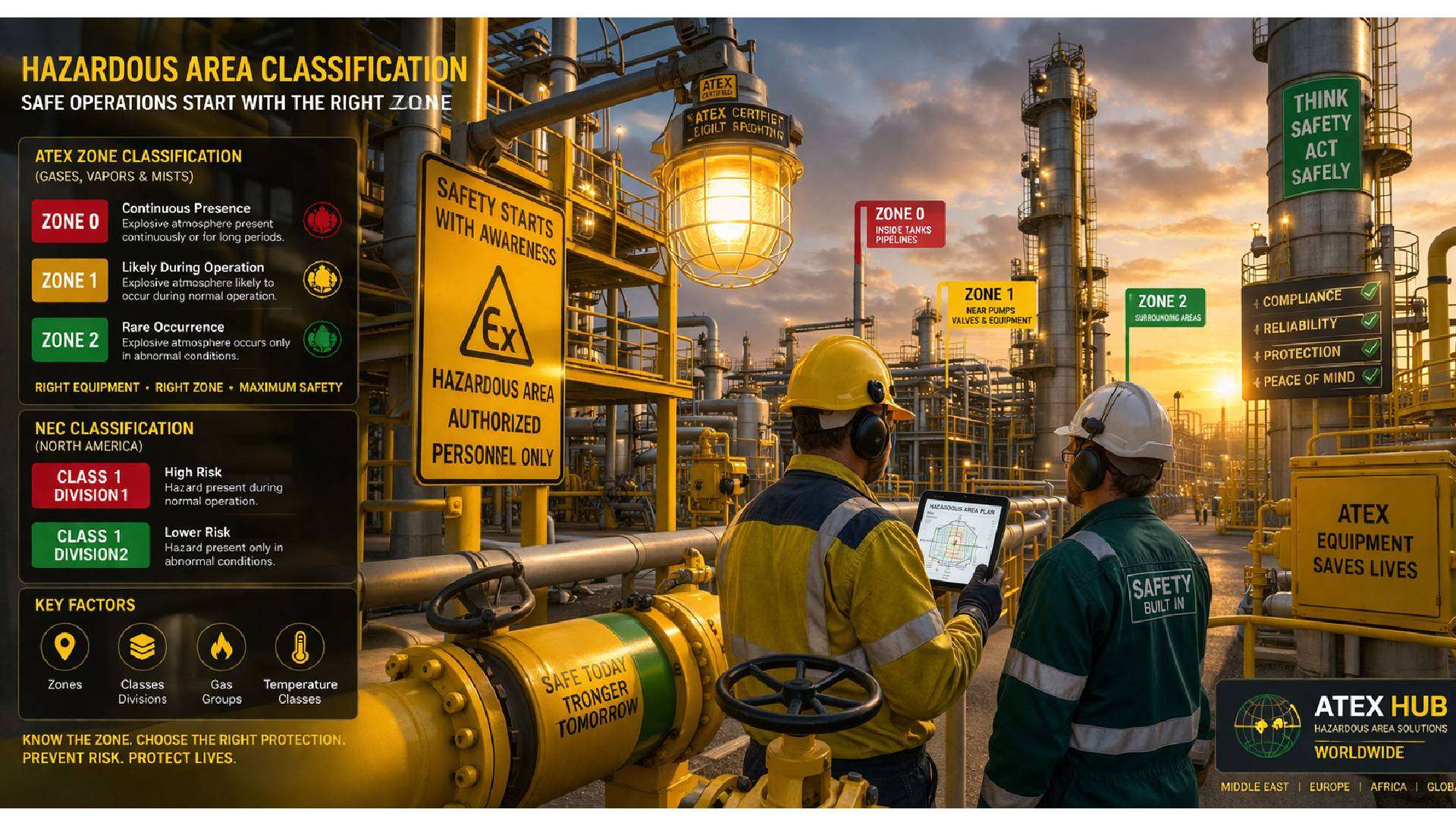
In industries like oil & gas, petrochemical, and mining, safety depends heavily on understanding hazardous area classifications. Terms like Zone 0, Zone 1, Class 1 Division 1, and temperature classes are not just technical—they directly impact the type of equipment you must use.
At Atex Hub, based in Dubai, we help industries across Saudi Arabia, Qatar, Oman, Kuwait, and Bahrain choose the right equipment for hazardous environments.
This guide will clearly explain zones, classes, divisions, gas groups, and temperature ratings in a simple and practical way.
What is Hazardous Area Classification?
Hazardous area classification is the process of identifying and categorizing areas where explosive atmospheres may occur.
👉 It helps determine:
- What type of equipment is safe
- What level of protection is required
- How to prevent ignition risks
Without proper classification, using the wrong equipment can lead to serious accidents or explosions.
ATEX Zone Classification (European System)
ATEX uses a Zone system based on how often explosive gases are present.
Zone 0 – Continuous Presence
- Explosive atmosphere present all the time or for long periods
- Highest risk level
Example:
- Inside fuel tanks
- Inside pipelines
👉 Only intrinsically safe (Ex i) equipment is allowed here
Zone 1 – Likely During Operation
- Explosive atmosphere likely during normal operation
Example:
- Around pumps, valves, compressors
👉 Requires:
- Explosion proof (Ex d)
- Flameproof equipment
Zone 2 – Rare Occurrence
- Explosive atmosphere occurs only under abnormal conditions
Example:
- Areas surrounding Zone 1
👉 Lower risk but still requires certified equipment
NEC System (Class & Division – US Standard)
The NEC system (used mainly in the USA) classifies hazardous areas differently.
Class 1 – Gas & Vapor
- Flammable gases or vapors present
Division 1 – High Risk
- Hazard present during normal operation
👉 Equivalent to:
Zone 0 / Zone 1
Division 2 – Lower Risk
- Hazard present only in abnormal conditions
👉 Equivalent to:
Zone 2
ATEX vs NEC
| ATEX Zone | NEC Equivalent | Risk Level | Typical Use Area |
|---|---|---|---|
| Zone 0 | Class 1 Division 1 | Very High | Inside tanks |
| Zone 1 | Class 1 Division 1 | High | Pumps, valves |
| Zone 2 | Class 1 Division 2 | Moderate | Surrounding areas |
👉 Both systems aim for the same goal: prevent explosions, but use different terminology.
Gas Groups Explained (IIA, IIB, IIC)
Not all gases behave the same. Some are more explosive than others.
Gas Groups Classification
| Group | Gas Type | Risk Level |
|---|---|---|
| IIA | Propane | Low |
| IIB | Ethylene | Medium |
| IIC | Hydrogen | Very High |
👉 Equipment must be selected based on the gas group.
For example:
- Equipment suitable for IIC can be used for IIB and IIA
- But not the other way around
Temperature Classes (T1 to T6)
Temperature is another critical factor.
If equipment gets too hot, it can ignite gases.
Temperature Classes Table
| Class | Max Surface Temperature | Example |
|---|---|---|
| T1 | 450°C | Low-risk gases |
| T2 | 300°C | Industrial gases |
| T3 | 200°C | Common gases |
| T4 | 135°C | Petrochemical |
| T5 | 100°C | High-risk areas |
| T6 | 85°C | Very sensitive gases |
👉 Lower temperature = higher safety
Why These Classifications Matter
Understanding zones and classifications helps you:
✔ Select the right equipment
✔ Avoid safety risks
✔ Meet international standards
✔ Protect workers and assets
For example:
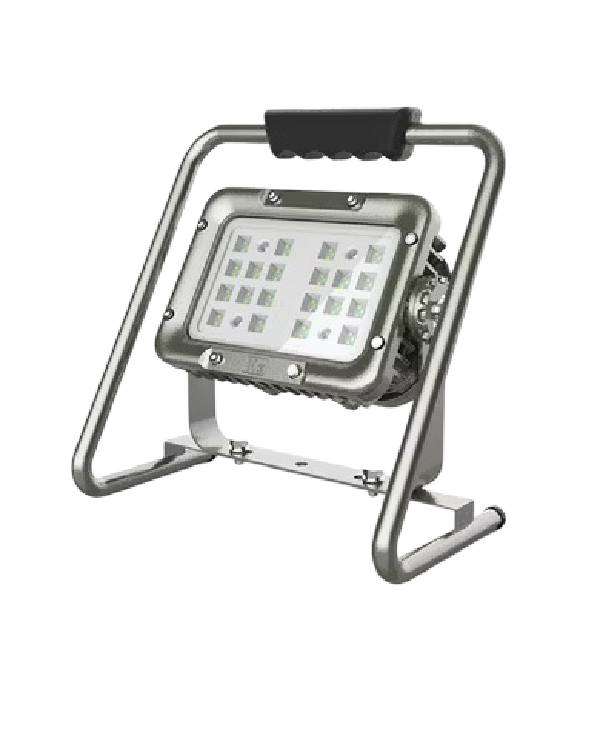
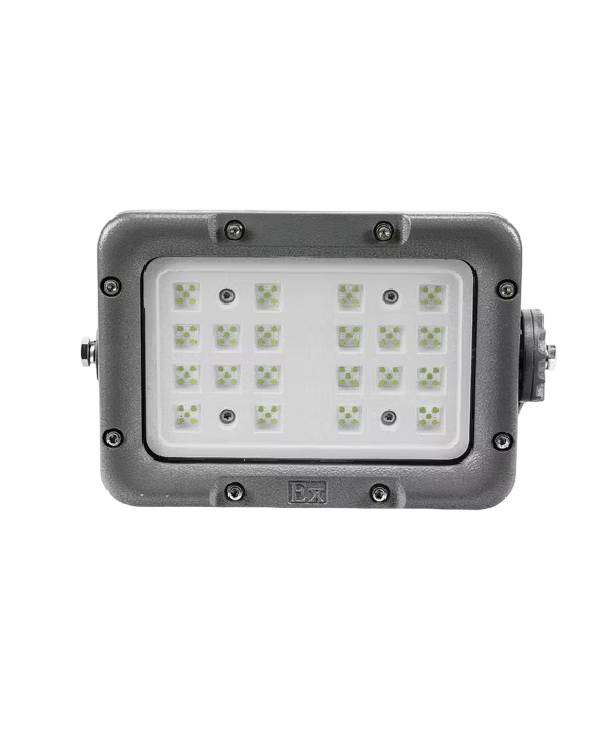
- Using a normal light in Zone 1 = high explosion risk
- Using ATEX-certified light = safe operation
Where These Classifications Are Used
These systems are widely used in:
- Oil refineries in UAE & Saudi Arabia
- Gas plants in Qatar
- Chemical industries in Europe
- Mining operations in Africa
👉 These industries depend on correct classification to maintain safety.
How to Choose Equipment Based on Classification
When selecting equipment, always check:
- Zone (0, 1, 2)
- Gas group (IIA, IIB, IIC)
- Temperature class (T1–T6)
- Certification (ATEX / IECEx)
👉 Choosing the wrong equipment can lead to serious hazards.
Conclusion
Hazardous area classification is the foundation of safety in industrial environments.
Understanding zones, classes, divisions, gas groups, and temperature ratings helps ensure that the right equipment is used in the right place.
At Atex Hub, we simplify this process by helping industries across Dubai, Saudi Arabia, Qatar, and global markets choose the correct ATEX-certified and explosion proof equipment.
👉 The right classification is not just technical—it is critical for safety, compliance, and reliability.